
Protein Labeling Reagents


Biotium Aminooxy-Biotin
Aminooxy-biotin can be used to covalently attach biotin to a molecule with an aldehyde or ketone group. The aminooxy group reacts with an aldehyde or ketone group to form a stable oxime linkage in an aqueous solution at neutral pH. The reaction is fast and can be further accelerated by adding aniline as a catalyst. Thus, aminooxy reagents are superior to hydrazide reagents, which also react with aldehydes or ketones but form unstable hydrazone linkages.


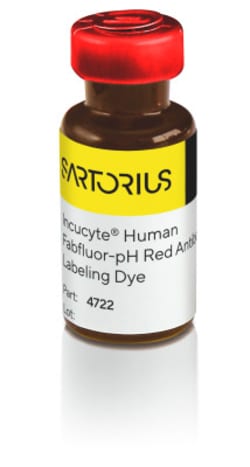
Sartorius Incucyte Human Fabfluor-pH Antibody Labeling Dye for Antibody Internalization
One vial (50 ug) of lyophilized conjugate sufficient for labeling large quantities of human test antibodies in 96-well format.

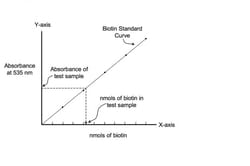
Vector Laboratories Quant*Tag™ Biotin Quantitation Kit
The Quant*Tag™ Biotin Kit (BDK-2000) is designed to determine the amount of free biotin in solution or the number of biotins attached to nucleic acids, proteins, or other macromolecules. This kit can be used to determine accurately the labeling efficiency of biotin-labeled molecules. Unlike conventional biotin quantitation methods like the HABA assay, no predigestion of protein or nucleic acids is required, saving time & increasing accuracy. This kit, which is more sensitive than the HABA assay, is able to detect less than 1 nmol of biotin. Quant*Tag Kit reagents chemically react w/ free or bound biotin producing a colored product that can be quantified using a spectrophotometer. The absorbance is measured in the visible spectrum allowing the use of plastic cuvettes or microtitre plates. Quick & easy to use, and the assay can be completed in 30 minutes. A biotin standard is included and the kit contains sufficient reagents to perform from 25 to 250 tests depending on assay size.
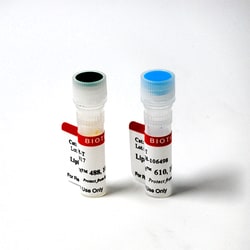
Biotium LipidSpot™ 488 Lipid Droplet Stain, 20 uL
LipidSpot™ Dyes rapidly stains lipid droplets in live cells or fixed cells, with no wash step required. Available with green or red/far-red fluorescence.
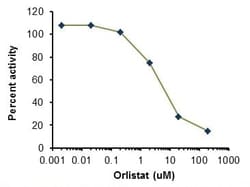
Abcam Lipoprotein Lipase Assay Kit (Fluorometric)
Lipoprotein Lipase Assay Kit (Fluorometric)
The product is subject to the following: Abcam Restricted Use Statement
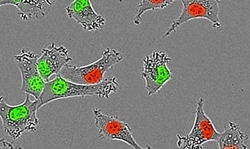

ACROBiosystems Antibody Internalization Detection Reagent, 100 tests
Antibody Internalization Detection Reagent labels human IgG Fc with a pH-sensitive red fluorescent dye to enable real-time monitoring of antibody endocytosis in live cells. It forms a stable fluorescent complex rapidly and is compatible with flow cytometry and fluorescence imaging.
- Labels human IgG Fc with a pH-sensitive red fluorescent dye.
- Enables real-time monitoring of antibody endocytosis in live cells.
- Compatible with flow cytometry and fluorescence imaging.
- High signal-to-noise ratio with bright fluorescence in acidic compartments.
- Rapid labeling, complete in about 10 minutes.
- Lyophilized for long-term storage; protect from light and avoid repeated freeze-thaw cycles.
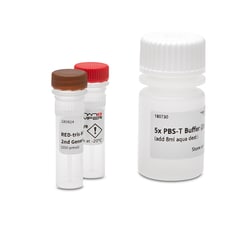
Nanotemper Technologies Inc His-Tag Labeling Kit RED-tris-NTA 2nd Generation

Protein Labeling Kit RED-tris-NTA 2nd generation Monolith
Biotium LysoView™ Dye 488 50UL
LysoView™ 488 is a green fluorescent lysosome stain for live cells, for detection in the FITC channel.
Lumiprobe AF 647 NHS Ester, 5 mg, far-red fluorescent dye, NHS ester, pH-insensitive (4-10), high water solubility, applications: cellular visualization, imaging, flow cytometry
AF 647 NHS Ester, 5 mg, far-red fluorescent dye, NHS ester, pH-insensitive (4-10), high water solubility, applications: cellular visualization, imaging, flow cytometry
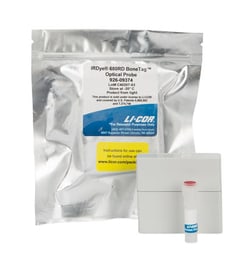
LICOR IRDye 680RD BoneTag™ Optical Probe (4 x 10 nmol)
IRDye 680RD BoneTag Optical Probe is a calcium-chelating compound conjugated to IRDye 680RD near-infrared dye. Using IRDye NIR dyes extends fluorescence signal detection to the near-infrared fluorescent region of the spectrum without affecting the compound’s ability to function as a marker of the mineralization process. NIR fluorescence detection improves depth of penetration due to low tissue autofluorescence, translating to low background interference. Calcium-chelating compounds have been used effectively for the detection of bone mineralization, growth, and morphological changes, including tetracycline derivatives, xylenol orange, alizarin, calcein, and fluorescein. NIR-labeled pamidronate has also been successfully used for detection of arterial calcification in non-invasive optical imaging.
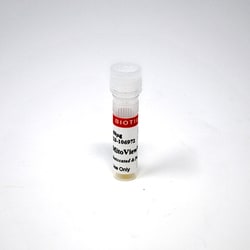
Biotium MitoView™ 405 Mitochondrial Dyes | 20 x 50ug
MitoView™ 405 is a blue fluorescent mitochondrial dye with absorbance/emission at 398/440 nm, suitable for detection by confocal microscopy or flow cytometry using settings for DAPI or Pacific Blue. The dye is membrane permeable and becomes brightly fluorescent upon accumulation in the mitochondrial membrane. Mitochondrial localization is dependent on mitochondrial membrane potential; when membrane potential is disrupted the dye relocalizes to the cytoplasm, but still retains fluorescence. The dye is designed for use in live cells and is not fixable.
Biotium LipidSpot 488, fluorogenic neutral lipid stain, green fluorescence, 1000X concentration, DMSO solvent, 2 to 8 °C storage
LipidSpot 488, fluorogenic neutral lipid stain, green fluorescence, 1000X concentration, DMSO solvent, 2 to 8 °C storage